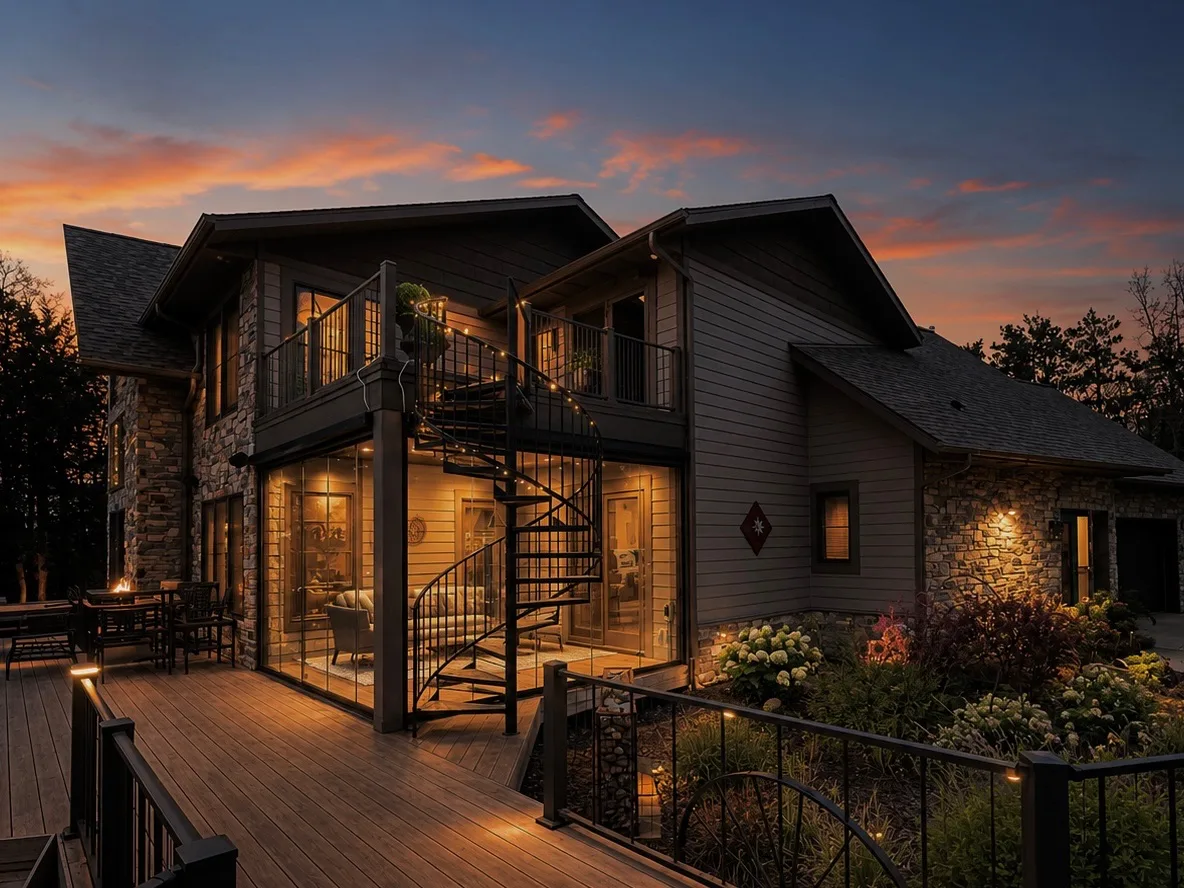
Almost everyone who has lived through a Minnesota winter asks us some version of the same thing. That is a lot of glass, and we get a lot of snow. What happens in January?
It is the right question, and the answer comes in three parts, because winter does three different things to a porch. Snow loads the roof. Snow and wind push on the walls. Meltwater turns to ice in places you would rather it did not. The glass deals with each one differently.
Snow load is a roof question
When a builder or an inspector says snow load, they mean the weight of snow a roof has to carry. Minnesota writes the starting number into the state building code. The ground snow load is 50 pounds per square foot in most counties, including Wright, Hennepin, and Carver, and 60 pounds per square foot in the northern counties, a list that includes Crow Wing, Cass, Mille Lacs, and Otter Tail. Roof design loads are worked out from there.
Our glass holds up none of that. We glaze the openings under a roof that already exists, between posts that are already carrying it. The panels fill the space and the structure does the structural work. A porch roof has to stand on its own with or without us.
So the honest answer to "can the glass take the snow load" is that the glass never sees it. The roof does, and the real question is whether the roof and the beam under it are doing their job.
Why we care so much about the header
Here is where snow does reach the glass, indirectly. Lumon's retractable panels are carried by the upper track, and the upper track is fastened to the header, the beam that spans the top of the opening. That same beam holds up the edge of the roof. In February it is carrying the roof, the snow on the roof, and the panels.
Every beam bends a little under load. A properly sized header bends so little you would never know. An undersized one, or one that has been wet for years, sags in the middle under a heavy snow, and a track fastened to a sagging beam stops being straight. Panels that slid with one finger in October start to drag.
That is why the header gets more of our attention on a measuring visit than anything else. We sight down it, measure the opening height at several points, and look at how it is supported at each end. If it needs to be stiffened or replaced, that happens before any glass is ordered. Porch roofs that were built with a permit are rarely the problem. The ones that worry us are the deck roofs somebody added on a weekend with whatever lumber was on sale.
Snow against the glass
The roof keeps snow off the top. The sides are another matter. Wind packs drifts against the windward wall, and on a lot of houses the porch sits right where an upper roof dumps its snow.
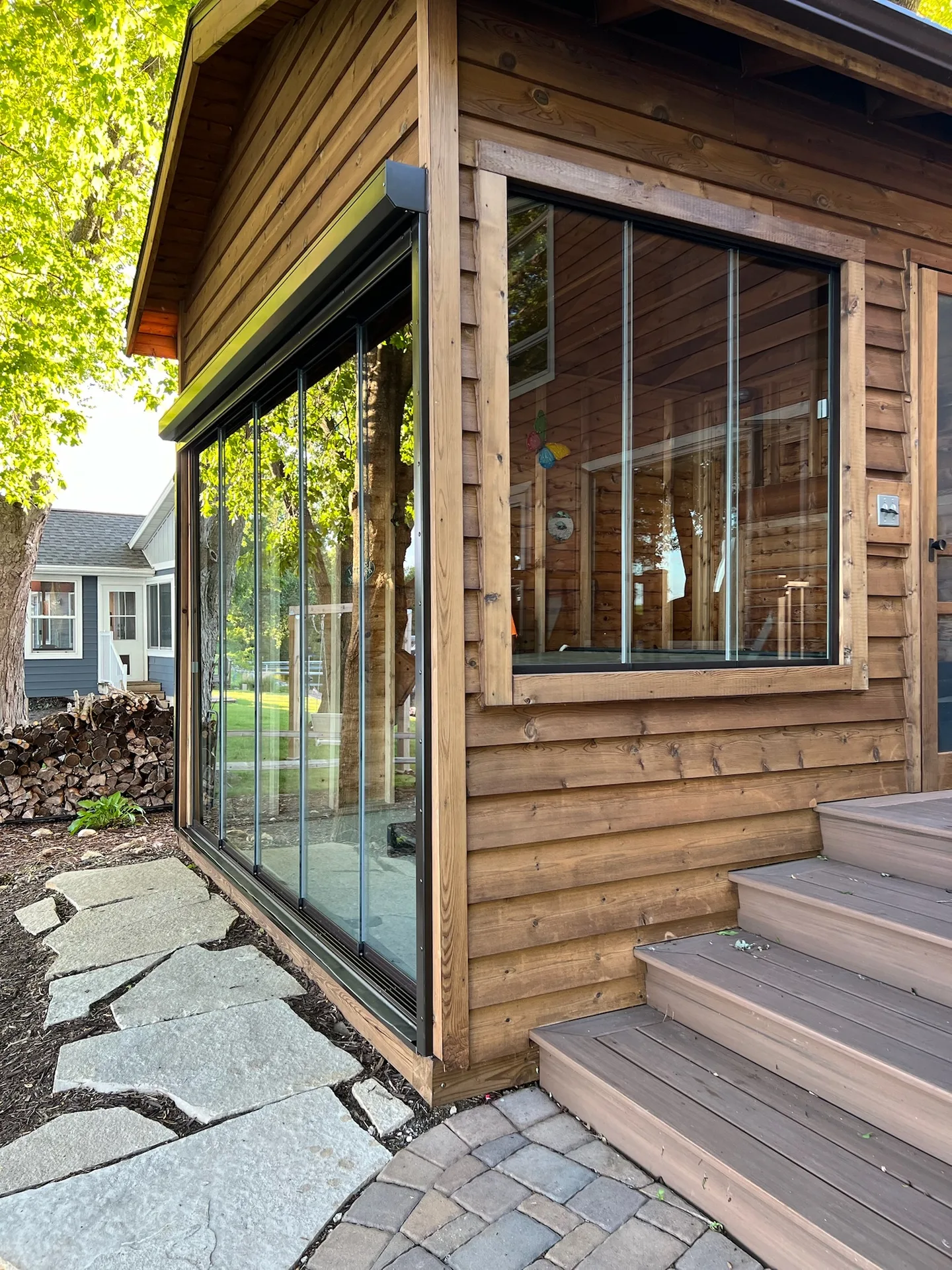
The panels are tempered safety glass. Lumon makes them from 6 to 12 millimeters thick, and the thickness is chosen for the size of the opening and how exposed it is. The sideways force they are designed around is wind. Tempered glass also flexes. On a very windy day you can watch a tall panel bow slightly and come back, and that is the glass working the way it was designed to.
A drift resting against the lower glass is a slow, light push next to a wind gust, and it is not what worries us. The sudden version is. A slab of snow letting go from a steel roof two stories up lands hard, and anything in the slide path takes a beating whether it is glass, wood, or aluminum. If your upper roof sheds onto the porch, tell us on the first visit. Snow guards on the roof above are a simple fix, and they are better sorted out before the install than after.
When you clear the deck, use a plastic shovel and keep the blade away from the glass. Tempered glass is tough across its face and weakest at its edges and corners, so the bottom edge of a panel is the wrong place to land a steel shovel.
The system is not sealed, on purpose
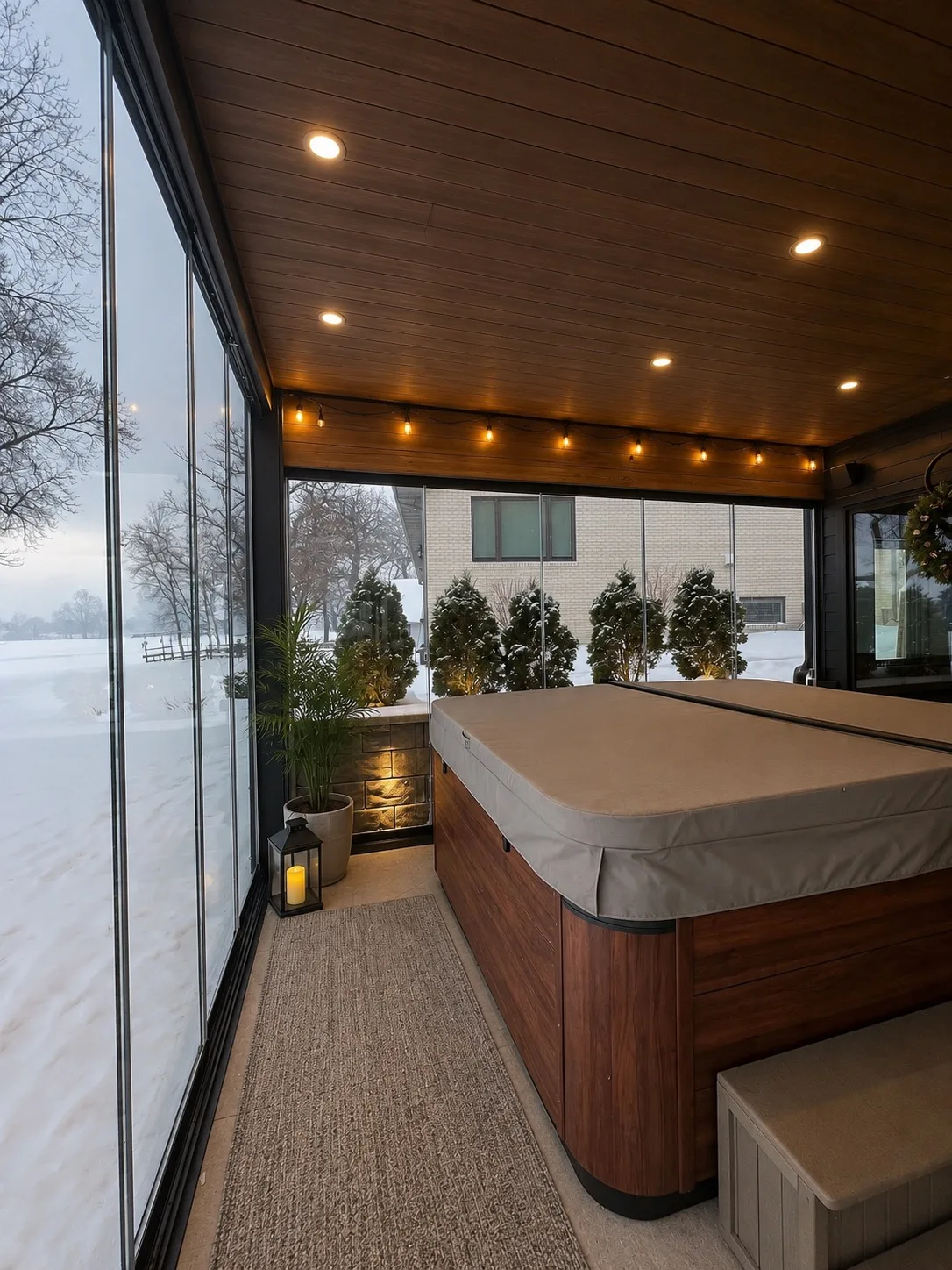
Retractable glass is single-pane, and there is a gap of two to three millimeters between panels. The gap lets the space breathe. It keeps moisture from getting trapped against the wood of your porch, and it is one of the reasons this is a three-season room and will never be a heated winter room.
In winter that means two things. In a ground blizzard, a little fine snow can sift through the gaps, and you may find a dusting along the bottom of the windward wall. It sweeps up. The glass will also frost. On a cold morning after somebody ran a heater or soaked in the hot tub, the inside of the panels can ice over like a car windshield. The sun clears it, and the gaps carry the moisture out.
You may also hear the porch tick on a bright, cold morning. Aluminum grows and shrinks with temperature, and the tracks make small noises when the sun hits them. That is normal.
Ice is the real winter nuisance
If anything about winter is going to annoy you, it is ice in the lower track. It forms the same way every time. Snow blows in or gets tracked in on boots. A sunny afternoon warms the porch enough to melt it, because glass traps the sun's heat even on a cold day. The water runs to the lowest point, which is the track, and it freezes again after sundown.
A track with ice in it will not let the panels move. The rule is simple: if a panel does not want to slide, do not make it. Forcing it is how wheels and hardware get damaged. Wait for a mild afternoon. Do not chip at the ice with a screwdriver or a scraper, and keep ice melt out of the track, because salt is hard on aluminum and on the moving parts.
There is very little reason to open the glass in January anyway. Close the panels in late fall, leave them closed, and the only part that has to work all winter is the one you walk through. Keep snow swept back from that threshold and you have done most of the job.
The prevention happens in October. Lumon's own maintenance advice is to vacuum the tracks regularly, because grit and leaves are hard on the wheels. Going into winter it matters twice as much. A track packed with leaves holds water, and held water is next month's ice. Clean the gutters above the porch for the same reason. A plugged gutter overflows down the glass all winter and builds ice at the bottom.
The floor has to stay put too
Frost is the other half of a Minnesota winter, and it matters most for patios at ground level. The state sets minimum footing depths for frost: three and a half feet in the southern zone, which covers the Twin Cities and Wright County, and five feet in the northern zone, which includes the Brainerd lakes and Alexandria.
A deck or porch on footings that deep does not move in winter. A patio slab poured on grade can. If the floor lifts even a little in February while the header stays where the house holds it, the opening gets shorter, and glass that was measured to the millimeter no longer has the room it was built for. Lumon says the same thing about its own product: a glazed terrace needs a frost-free foundation.
So on a ground-level patio enclosure we ask what the slab is sitting on and look for the signs of a floor that moves, like cracks that open and close with the seasons or a door that sticks every March. A covered patio that was built with the house, on the same foundation, is usually fine. It is a question worth asking before the order goes in.
What winter does not change
None of this makes retractable glass a winter room. It is unheated, single-pane, and ventilated, and in January the porch will be cold. We say so on every visit, and we wrote up the difference in three-season versus four-season porches and what heat can and cannot do behind it.
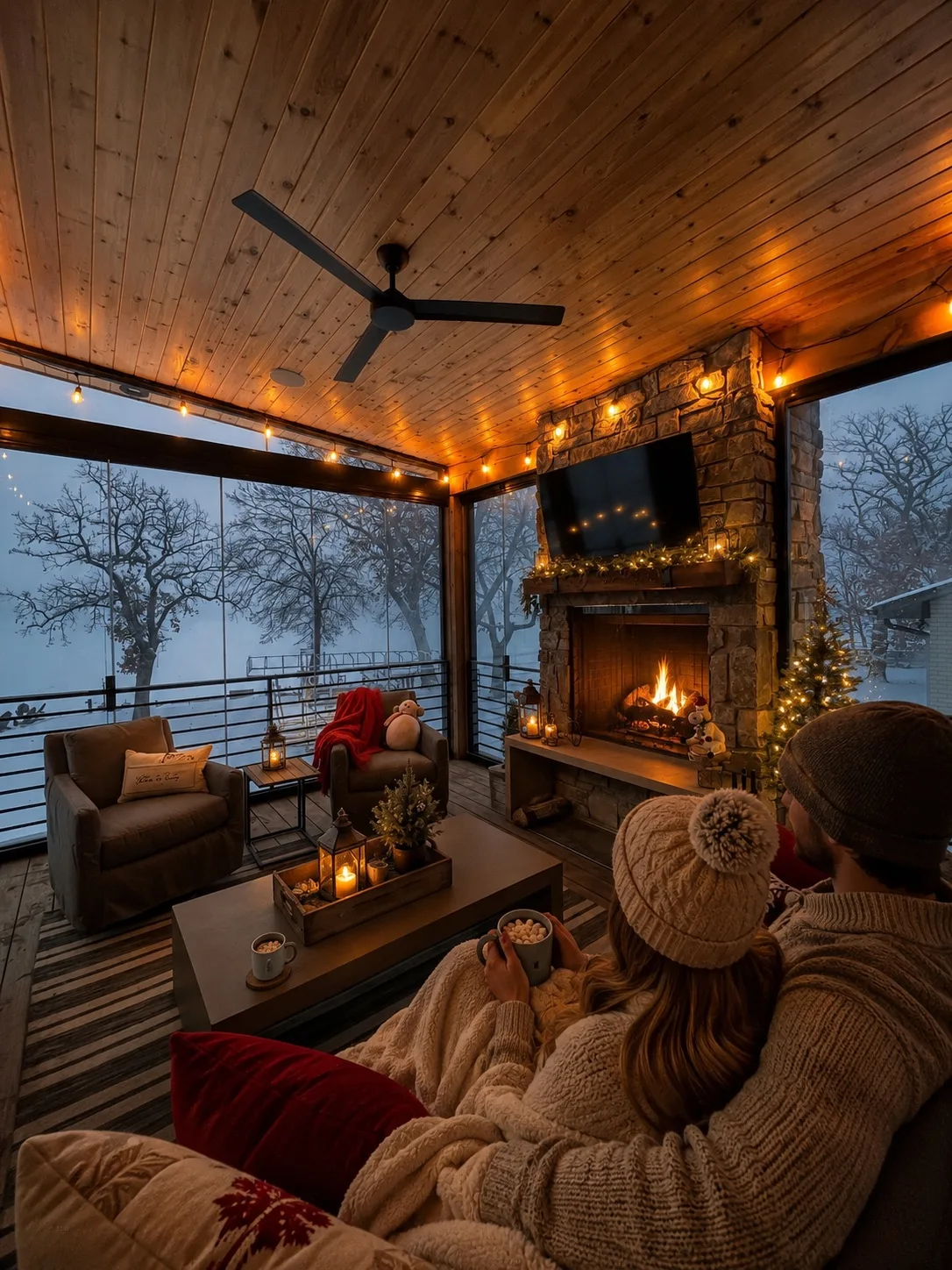
What the glass does in winter is protect the porch itself. Snow stays off the floor and the furniture. The decking does not spend four months under a drift. And the system comes from Finland, where it has been hanging on balconies through winters like ours for decades.
What we look at before we order
On a measuring visit, the winter questions are most of what we are checking. Is the header straight, and is it sized for the roof it carries? What does the floor sit on? Where does the roof above shed its snow, and which corner of the porch catches the drift? The answers decide whether we can order glass now or whether a carpenter needs to be there first.
Winter happens to be a good season for that visit, because the snow shows us where it goes. We covered the timing in why the May porch gets decided in December. If you want to see how the system goes together, start with glass porch enclosures or deck enclosures. We are based in Cokato and work from the west metro up through the Brainerd lakes and Alexandria, so we measure in both snow zones and both frost zones.
Want to see what any of this looks like on your own house? Book a free in-home consultation. We measure, talk through options, and leave you with a real number.