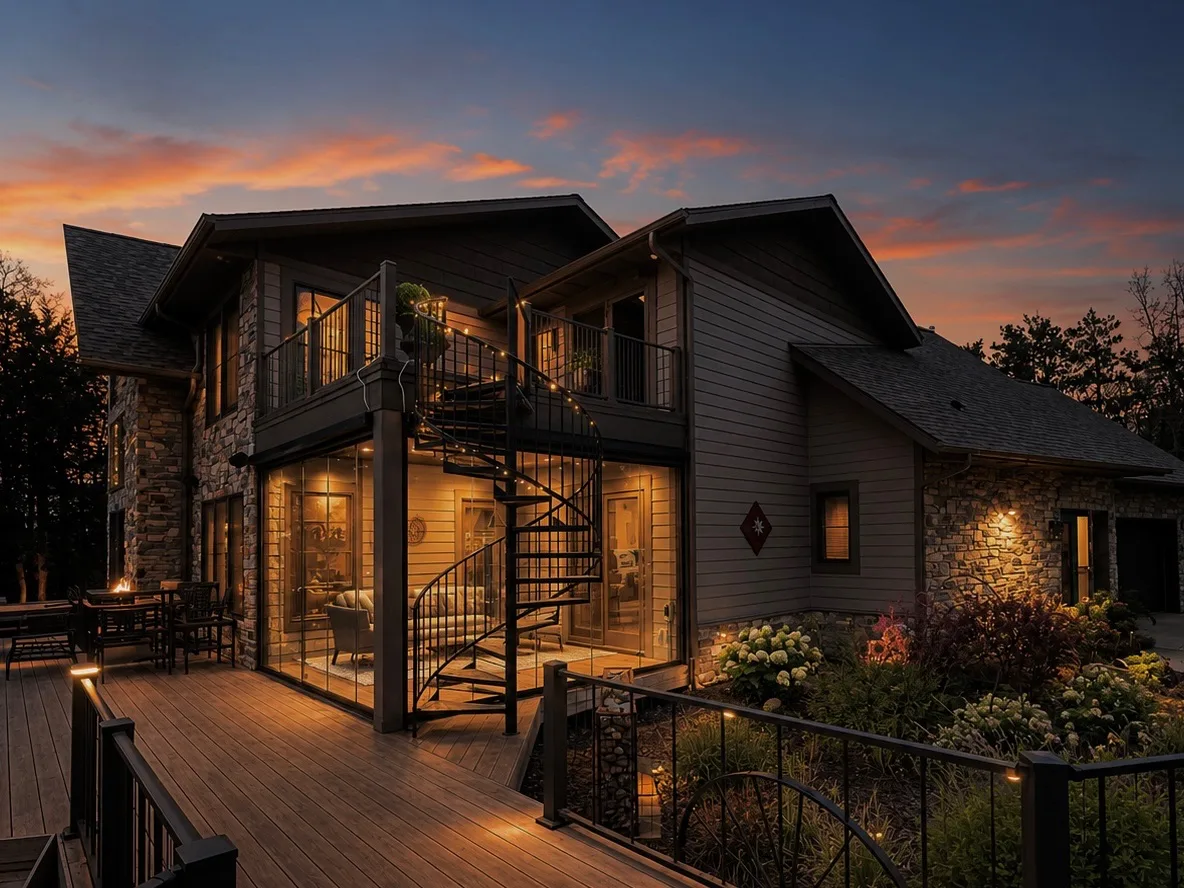
Every spring goes the same way. The first sixty-degree Saturday in April shows up, people walk out onto the porch for the first time since October, and they remember why they wanted glass on it last fall. The phone starts ringing that afternoon.
The trouble is that the porch they are standing on is going to spend May and most of June exactly the way it is. Glass that goes in during the spring was usually measured and ordered over the winter. The people who have it by Memorial Day are the ones who called in November.
Why the order of operations matters
Nothing we install comes off a shelf. Every opening gets measured to the millimeter, and every panel is manufactured to order for that opening in tempered safety glass. That is what makes the finished wall fit tight and slide clean, and it is also why the project has a sequence you cannot skip: measure, finalize the layout, order, manufacture, then install.
The install itself is the short part. Our own crew does most porches in two to three days, and the space is usable the evening we leave. Everything before that takes calendar time, and that calendar time is the same whether it starts in December or in April. Start it in April and you spend the best porch weeks of the year waiting on it.
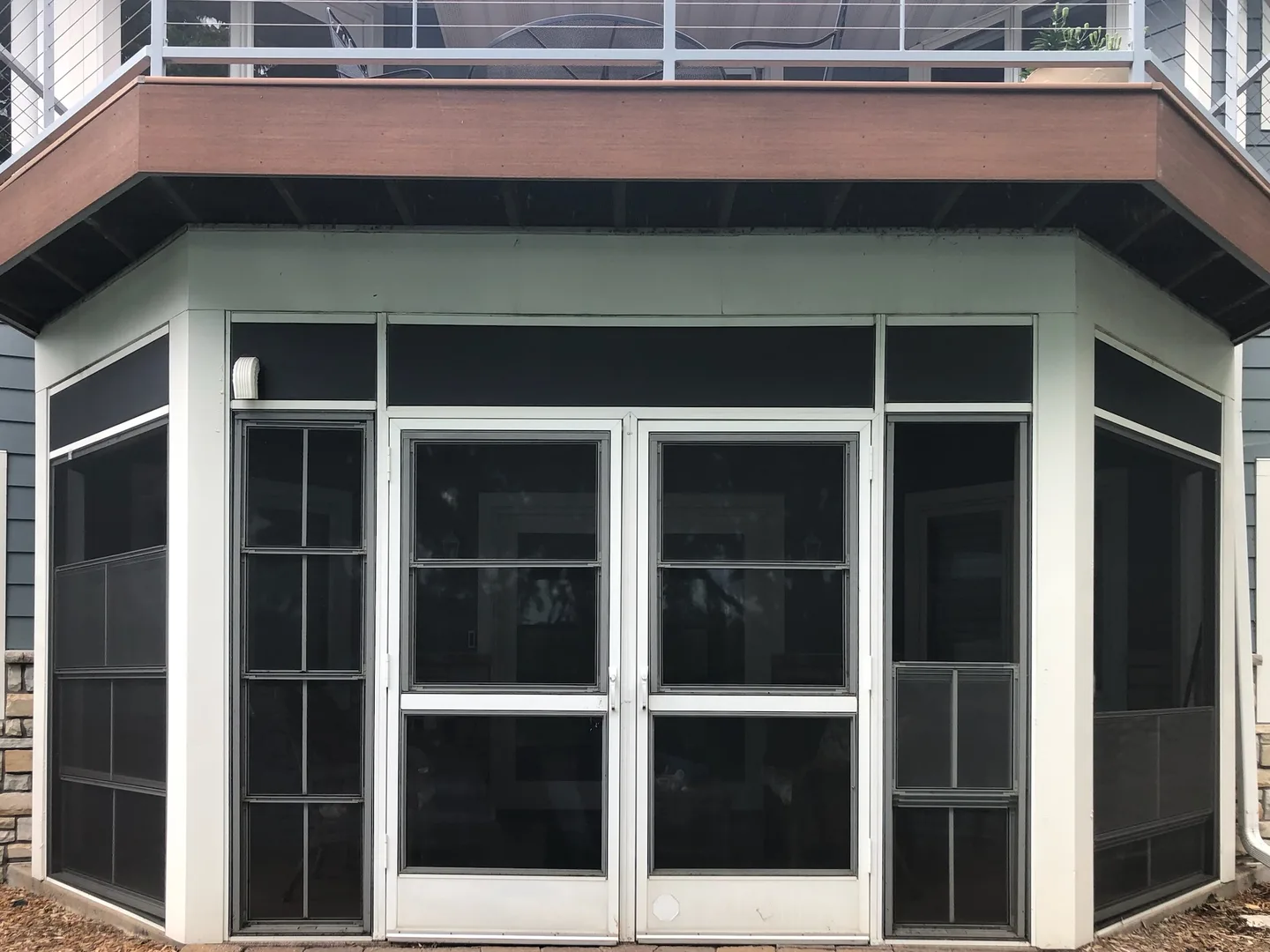
A covered porch measures the same in January
People assume we cannot do anything until the snow is gone. For most projects that is not true. We glaze under a roof you already have, so the openings we are measuring are sheltered. Header height, post spacing, how level the floor runs, which way the wind comes from: none of that changes with the season. Winter is actually a good time to see a porch, because you can see where snow drifts in and which corner takes the worst of the northwest wind.
The consultation is a measuring visit and a conversation. We look at the structure, talk through how you want to use the space, and leave you with a real number. Doing that in the off season means there is room in the schedule to take our time with it.
Decisions you can settle from the kitchen table
Most of what goes into a good enclosure is thinking, and winter is a good season for thinking. A few things are worth settling before anything gets ordered.
Where the panels stack. When the glass is open in July, the panels slide along the track and stack flat at one side of the opening. Which side matters. You want them stacked where they do not block the best view or the path to the steps.
Screens or no screens. Retractable screens are an option for the months when you want the glass open and the mosquitoes out. Some owners want them on every opening, some on none. It is easier to decide before the order than after.
How you will actually use it. A porch for morning coffee and a porch for a dining table that seats ten can want different layouts. If you are planning a fireplace or electric heat for the shoulder months, that affects the conversation too. We wrote about what heat makes sense behind glass, and the short version is that it should be planned with the enclosure, not added after.
Permits, associations, and other people's calendars
Whether you need a permit depends on your city and on whether any new structure is involved. We handle that conversation with the local building department and tell you what is required before any work starts. Building departments are not in a rush in January, and that is a nice time to be dealing with them.
If you live somewhere with a homeowners association or a lake association that reviews exterior changes, their approval runs on their meeting schedule, not yours. A board that meets monthly can add real time to a project that starts in spring. Starting in winter absorbs that.
The same goes for anything that has to happen before we show up. An open deck needs a roof before it can take glass, and a sagging header needs to be fixed first. If there is carpentry work ahead of us, winter is when to get a builder lined up so it is done before the ground thaws, not after.
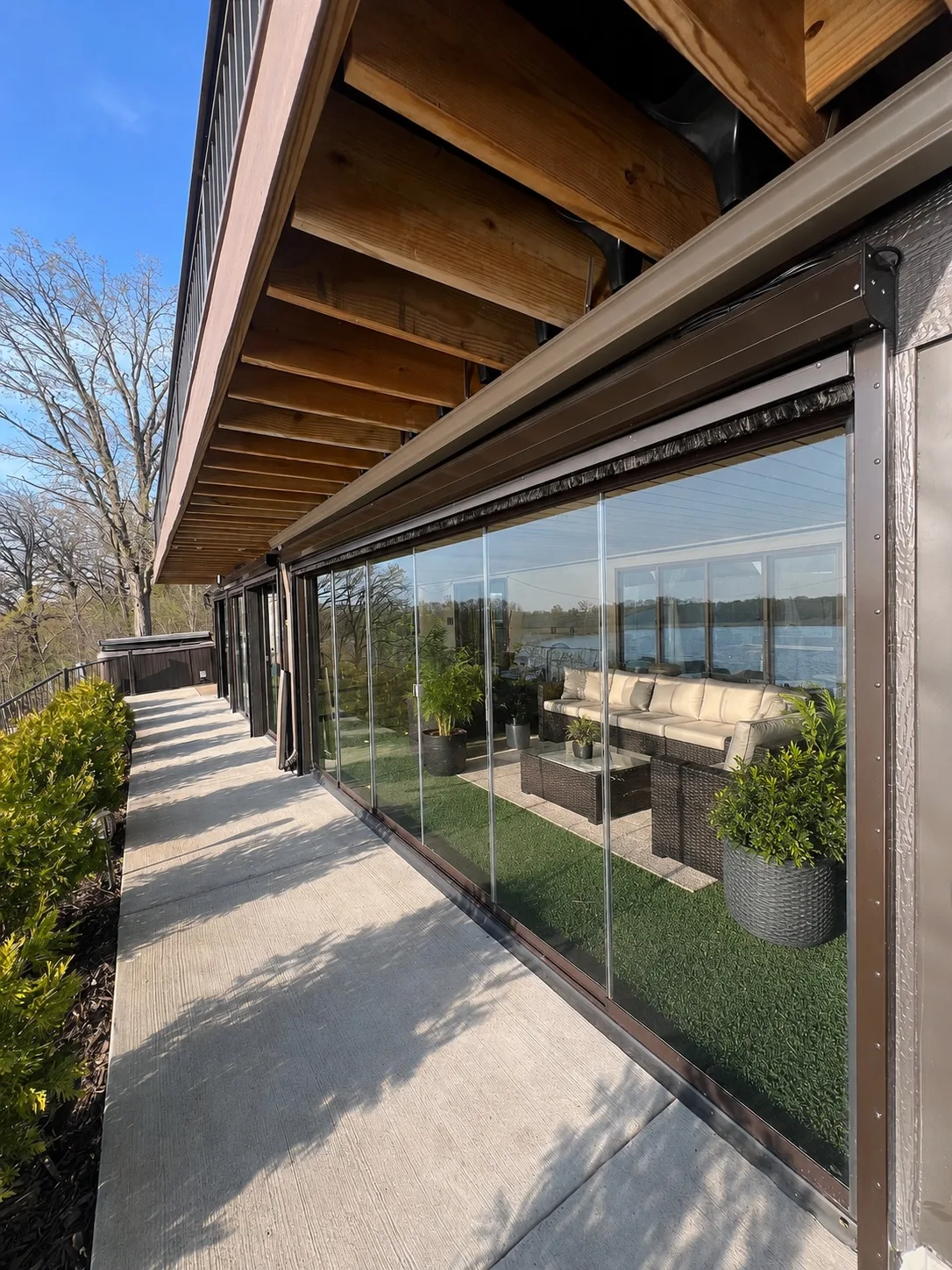
What spring looks like when the planning is done
When everything is settled over the winter, the spring part is short. The glass arrives, the crew shows up, and a couple of days later you have a room. Opening weekend at the lake becomes a weekend on a porch with the wind off it, not a weekend of pulling screens out of the garage.
We are honest about what that room is. It is unheated glass, a three-season room, and it does not turn a porch into winter living space. What it does is stretch the porch season on both ends. May stops being a month where you look at the porch through the kitchen window, and the cold, windy spring evenings that used to send everybody inside become usable ones.
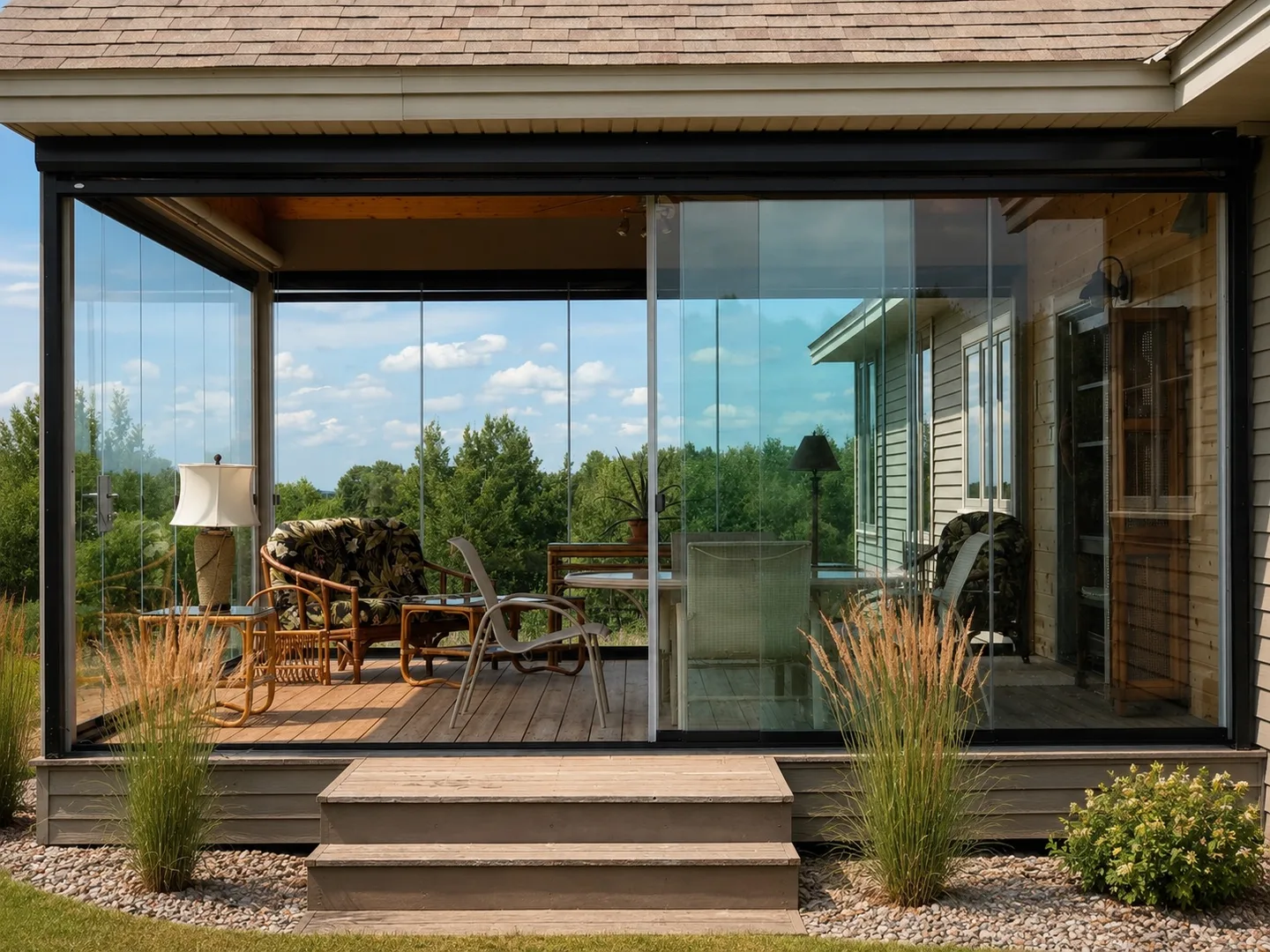
Where to start this winter
Take a few photos of the porch from outside and from inside, including the roofline and the floor at the edge. Write down the two or three things that end your evenings out there, whether that is wind, rain, bugs, or cold. That is enough for a first conversation.
If your porch is screened today, our page on glass porch enclosures and the walkthrough of what a conversion involves are the right next reads. For a covered deck, start with deck enclosures. We are based in Cokato and work across the west metro and lake country, from Minnetonka to the Brainerd lakes, and winter is when we have the most time to stand on your porch and talk it through.
Want to see what any of this looks like on your own house? Book a free in-home consultation. We measure, talk through options, and leave you with a real number.