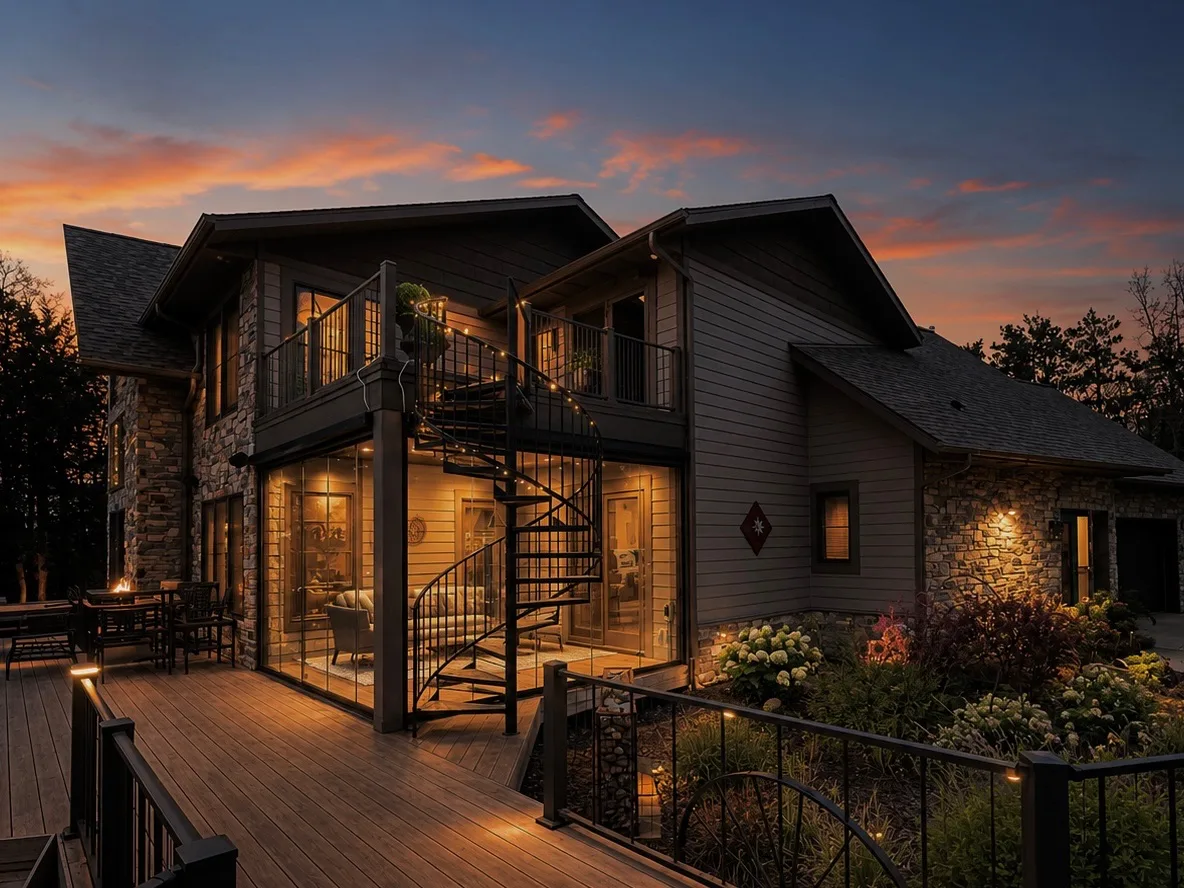
People buy lake lots for the view and the water, and then discover the third thing that comes with them: wind. There is nothing between your deck and the far shore to slow it down. A breeze that barely moves the trees in town arrives at a lakeshore deck with a mile of open water behind it, and it does not let up at sundown.
We hear the same story on almost every lake call. The deck is beautiful, the furniture is nice, and the family eats inside half the summer because the napkins will not stay on the table. The fix for that is usually smaller than people expect.
Why lake wind is its own problem
Wind picks up speed over open water because there is nothing to drag on it. Over a field or a neighborhood it trips over houses, trees, and fences. Over a lake it gets a clean run, so the shoreline catches it at full strength. The bigger the lake and the longer the stretch of water in front of you, the more of it you get.
There is also a daily pattern. On a warm day the land heats faster than the water, and air flows off the lake toward shore through the afternoon. That is the steady onshore breeze that hits right when you want to sit down with a drink. In spring and fall the water lags behind the air by weeks, and the temperature difference between the two keeps things moving well into the evening.
The practical result: on most lake decks, wind comes from a predictable direction, usually off the water. That is good news, because it means you often do not need to wrap the whole space. You need glass on the side where the wind actually comes from.
Option one: a patio windscreen
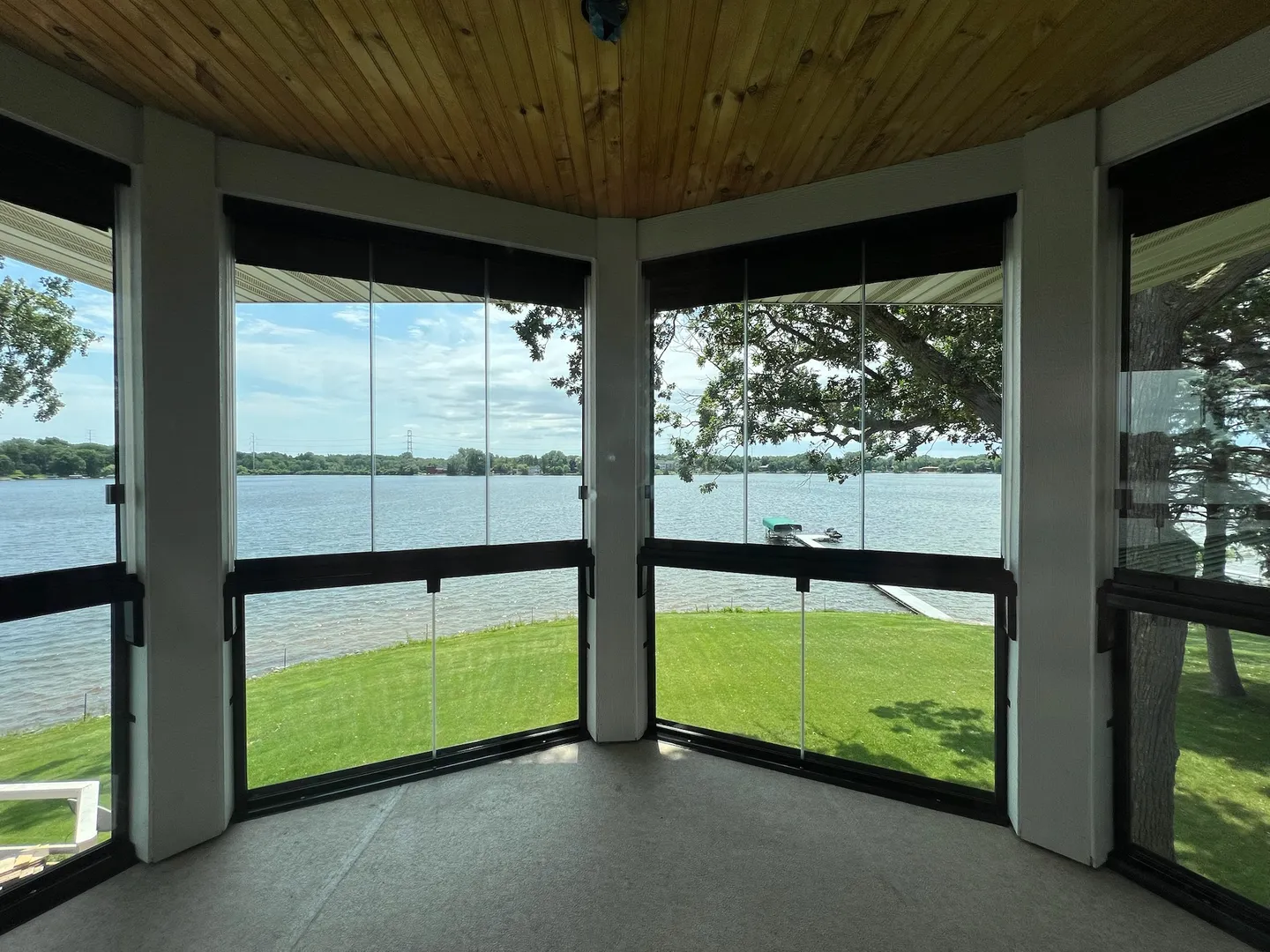
A windscreen is glass on one or two sides of a deck or patio, with the rest left open. No roof required, no walls on the house side. On a lot where the wind comes straight off the water, a run of glass along the shoreline edge takes most of the bite out of it, and the space still feels like a deck.
It is the lightest version of what we do, and on plenty of lots it is the whole answer. We wrote about it briefly in our patio enclosure ideas, and the advice there holds: start with the windward side and only go further if the problem is not solved.
The honest limit is that a windscreen is a partial fix. Wind that comes around the ends or swirls over the top still reaches you, and rain still falls on an uncovered deck. If your evenings are ending because of rain, or because the wind on your lot comes from two or three directions, a windscreen will help but it will not finish the job.
Option two: glass railings with glass above
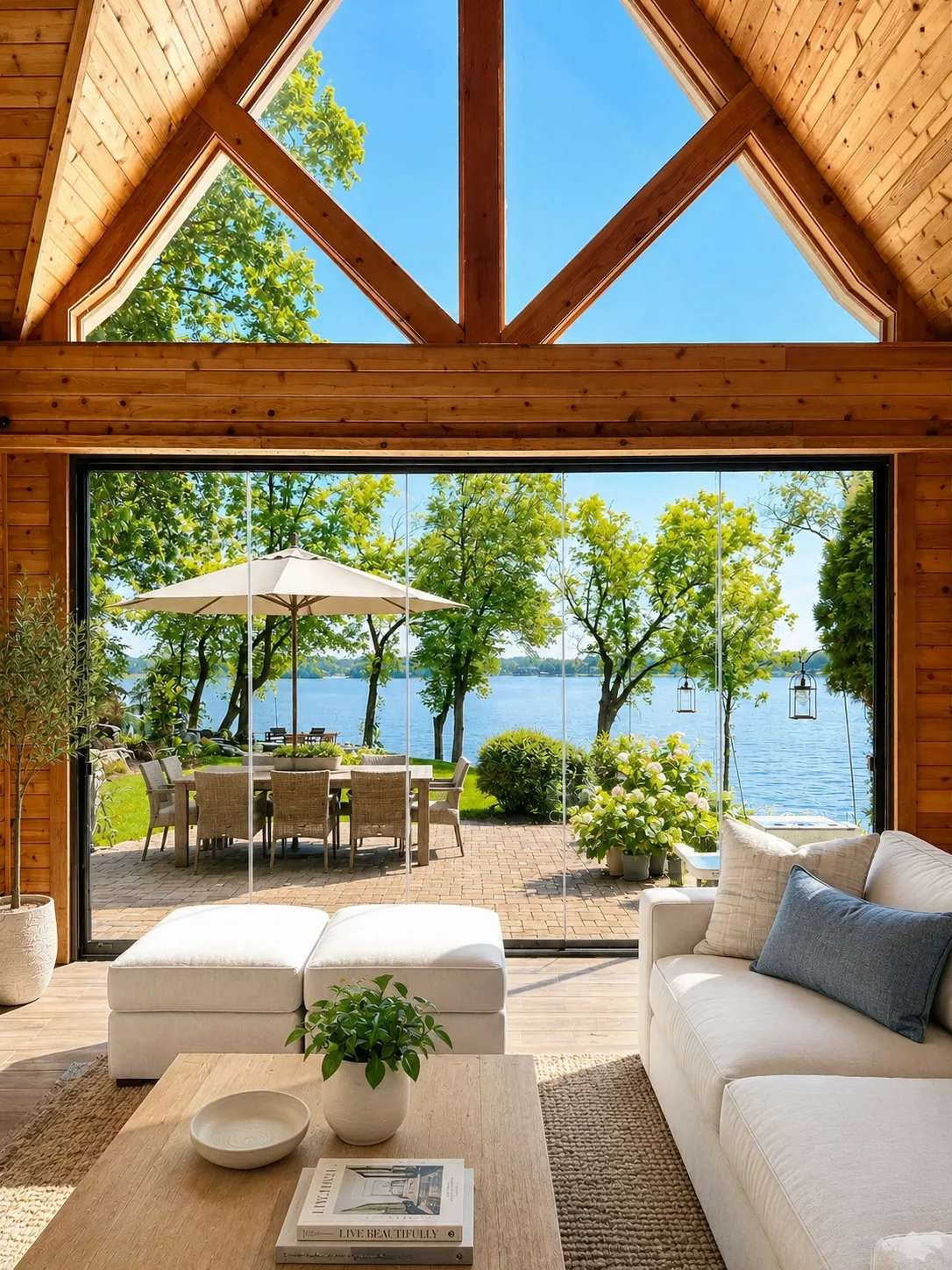
This is the system Lumon built for lake decks and second-story balconies, and it is worth explaining because it is not obvious from a photo. The lower section is a glass railing: fixed glass panels that serve as the guard at the deck edge. Above that, retractable glass panels run up to the roof or header on a track.
On a calm day you slide the upper panels aside and stack them at the end of the opening. What is left is a clean glass railing, which blocks some wind at seated height and nothing of the view. When the wind comes up, you slide the panels back across and the space closes.
The railing half is the part people underrate. A traditional wood or aluminum railing with balusters sits right at eye level when you are seated. On a lake deck, that means you look at the water through a set of bars. Glass removes them. It also blocks the low wind that comes across the deck surface, which is the wind that hits your legs and tips over the cushions.
You can see the whole system on our glass railings page. The upper panels need something to hang from, so this option fits a covered deck or porch with a roof. On an uncovered deck, the railing alone is still a real upgrade for wind and view.
The code side of glass railings
Any deck more than 30 inches off the ground needs a guard, and a glass guard is a structural part of the house, not decoration. Minnesota code has specific requirements for the glass used in guards, for guard height, and for how the posts and base are attached. A railing that works as a windscreen still has to hold a person leaning on it.
We do not treat that as fine print. The railing gets designed to the code for your deck, it goes through the local permit process where one is required, and we look hard at what the railing attaches to. An older deck rim board that has seen twenty years of lake weather is not always a place we want to mount a glass guard, and we will say so before anything gets ordered.
When to skip straight to a full enclosure
Sometimes the partial approach is the wrong one. Three signs point that way.
The first is wind from more than one direction. A lot on a point, or a deck with water on two sides, gets wind from wherever the weather is. Glass on one side just moves the problem.
The second is that you already have a roof. If the deck is covered or the porch is screened, glazing every opening is a shorter job than it looks, because the structure is already there. Our deck enclosure and porch enclosure pages cover how that works.
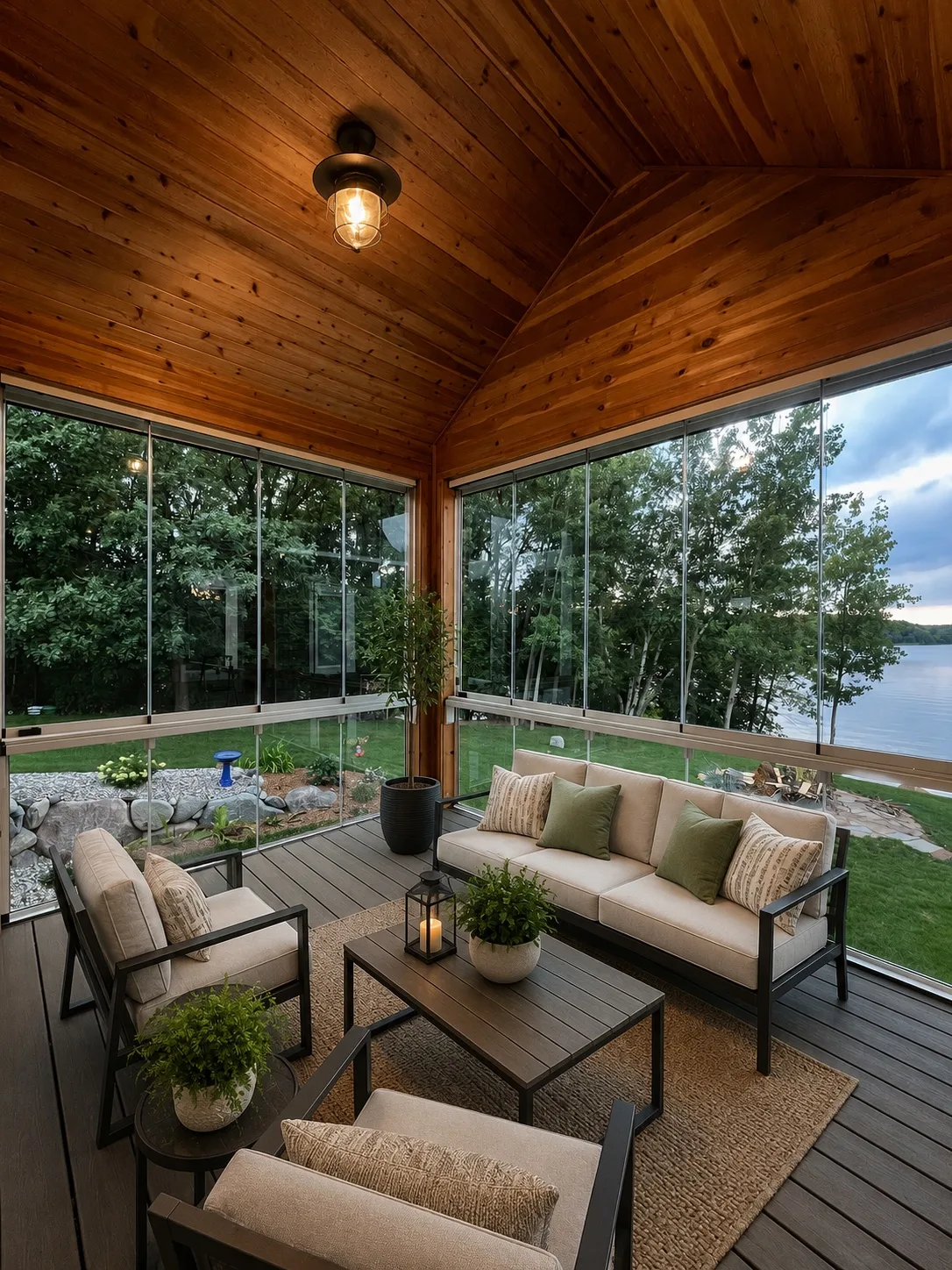
The third is that the season matters more to you than the breeze. Glass on every side is what moves a lake porch from a July room to a May through November room. It is still an unheated three-season space. It does not become a winter room. But it is sheltered from wind and rain in the shoulder months, and on a lake lot those months are some of the best of the year.
What to notice before you call
Spend a few evenings paying attention to where the wind comes from on your deck. It is often not where people assume, especially on lots with trees, a boathouse, or a neighbor's garage that funnels it. Notice whether it is steady or gusty, and whether rain is part of the problem. Take a photo of the deck edge and, if there is one, the roofline above it.
That is most of what we need to tell you whether a windscreen, a glass railing, or a full enclosure is the right fit. We work lake lots all over the region, including Lake Minnetonka, Waconia, Annandale, and the Brainerd lakes, so we have probably stood on a deck a lot like yours.
Want to see what any of this looks like on your own house? Book a free in-home consultation. We measure, talk through options, and leave you with a real number.