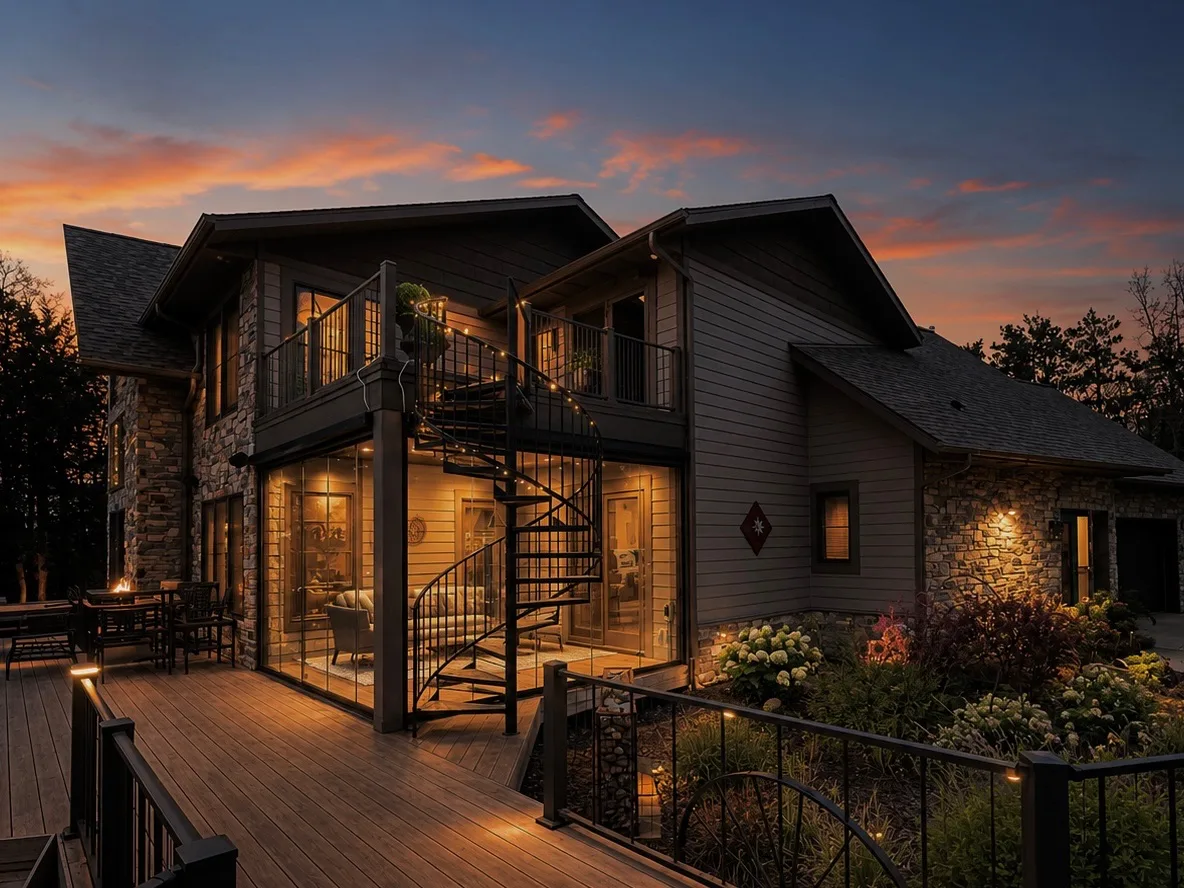
A screened porch is cheaper to build than a glass one. That is true and nobody at our company is going to argue about it. It is also the least interesting fact in the decision, because a porch is not a purchase you make once. It is a room you own, and rooms have running costs.
Here is the honest version of what each one costs after the crew leaves, based on the porches we walk into every week in Wright County and around the west metro lakes.
Mesh is a consumable
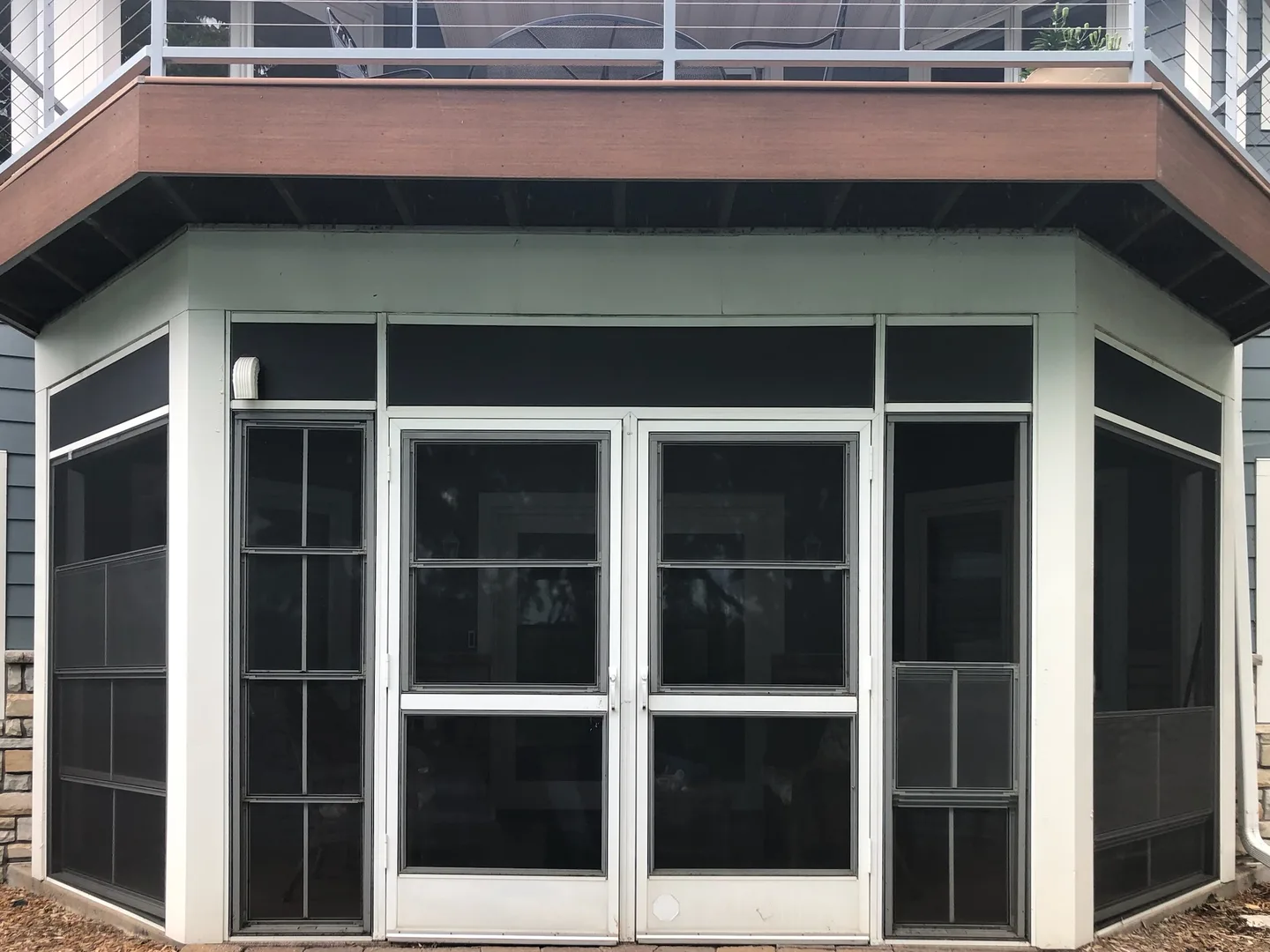
Screen mesh is a wear item, the same way shingles and deck stain are wear items. Manufacturers generally talk about ten to fifteen years for fiberglass mesh, but that figure describes a window screen on a shaded side of a house. A porch opening is a different job: eight or ten feet wide, unsupported in the middle, facing whatever the weather does.
What actually shortens it here is not age. It is a branch in a July storm, a hailstorm coming through Waconia sideways, a labrador who decided the screen was a door, or the spline drying out and letting a corner go slack. Once one panel sags, it never looks right again, and you are either rescreening the whole porch to match or living with one baggy opening.
The screen is not the only thing weathering
This is the part people miss. Mesh stops bugs. It does not stop rain, snow, pollen, or the grit that comes off a gravel road. All of that lands inside a screened porch, on the floor you stained, the ceiling you paid to have tongue and groove, and the furniture you bought for the room.
So the real running cost of a screened porch is a stack of small ones: refinishing the deck boards more often than the rest of the deck, washing everything down in May when the oak pollen hits, replacing cushions that got soaked one too many times, and hauling all of it into the basement in October and back out in May. None of those is a big number on its own. Ten years of them is not a small number.
What glass costs to keep
Glass has no consumable. There is nothing on a retractable glass wall that gets replaced on a cycle. You wash it, which takes about as long as washing the same number of windows, and the panels pivot inward so you do both faces standing on the porch floor instead of on a ladder in the yard. Twice a year we tell people to run a brush or a shop vac through the bottom track, because that is where pine needles and lake sand collect. That is the maintenance list.
Glass can break. If a rock comes off a mower deck or a branch comes down hard enough, a panel goes. The difference is the shape of the cost: that is a one-time event with a single-panel fix, while mesh is a scheduled replacement built into owning the room. And because the panels are tempered, a failure crumbles rather than leaving shards standing in a frame.
Cost per usable evening
If you want one number to think about, make it this one. Divide what the porch cost by the number of evenings you actually sit in it.
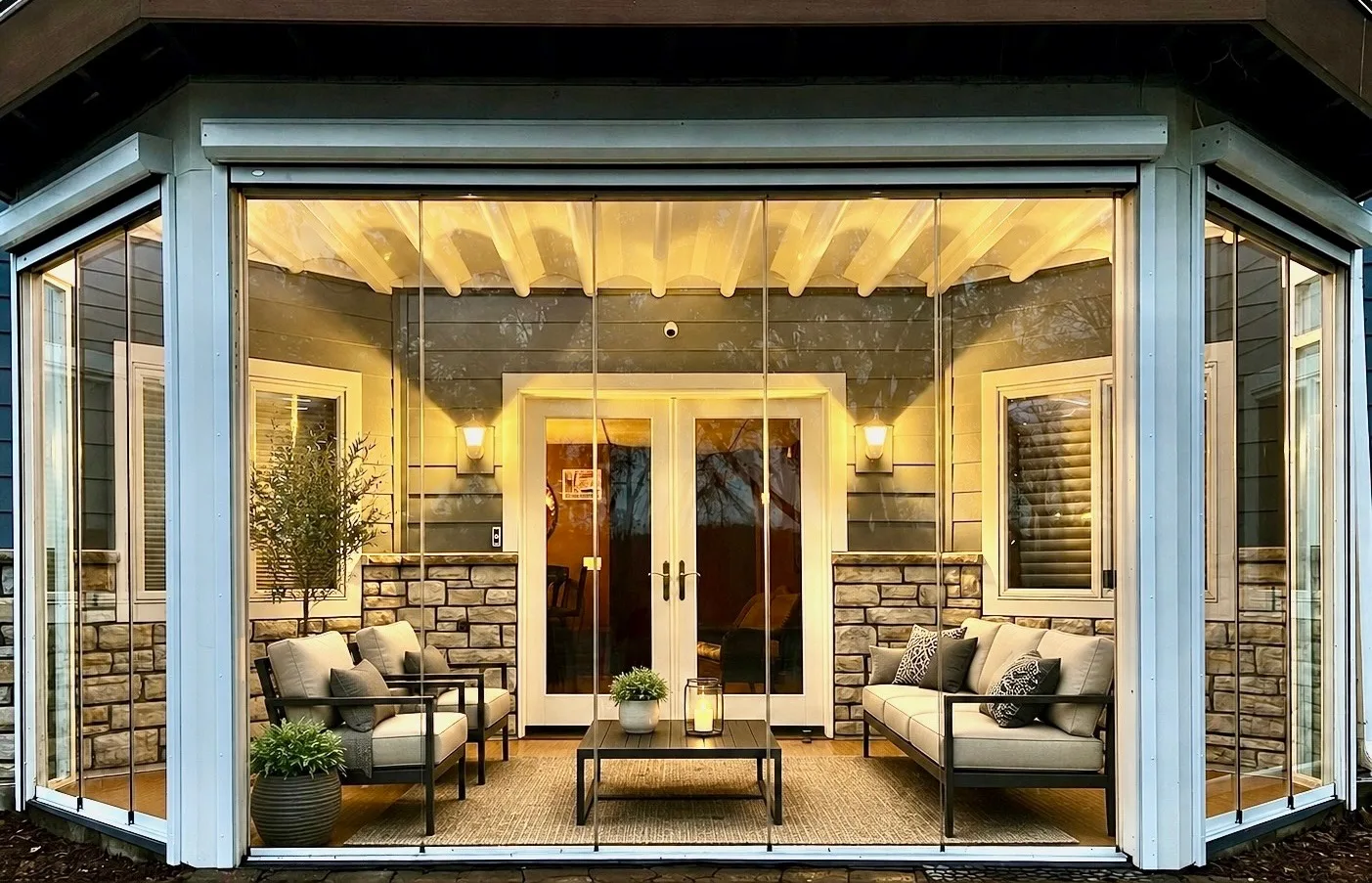
A screened porch in Minnesota is a Memorial Day to late September room, and even inside that window the wind takes evenings away from you. A glass porch is still a three-season room, and we are never going to call it anything else, because it is unheated and it is not where you spend January. What it does is give you back the shoulders: April afternoons, the whole month of May, and the stretch from late September into November when the glass blocks the wind and the sun does the rest. That is roughly double the usable days out of the same footprint, which moves the cost-per-evening math a long way in the other direction.
Screens still have a job
We are not anti-screen. We install screens. The problem with a traditional screened porch is that the mesh is permanent: it sits in your view on a perfect October evening when there is not a mosquito within a mile, and it is still sitting there in April.
The version that works is motorized screens that retract out of sight, paired with glass. Glass closed in the shoulder seasons, screens down in July when the bugs are up and you want air, both of them out of the way the rest of the time. You stop choosing between a view and a bug barrier, and you stop paying for mesh that hangs there twelve months a year to do a two-month job.
The case where the math is obvious
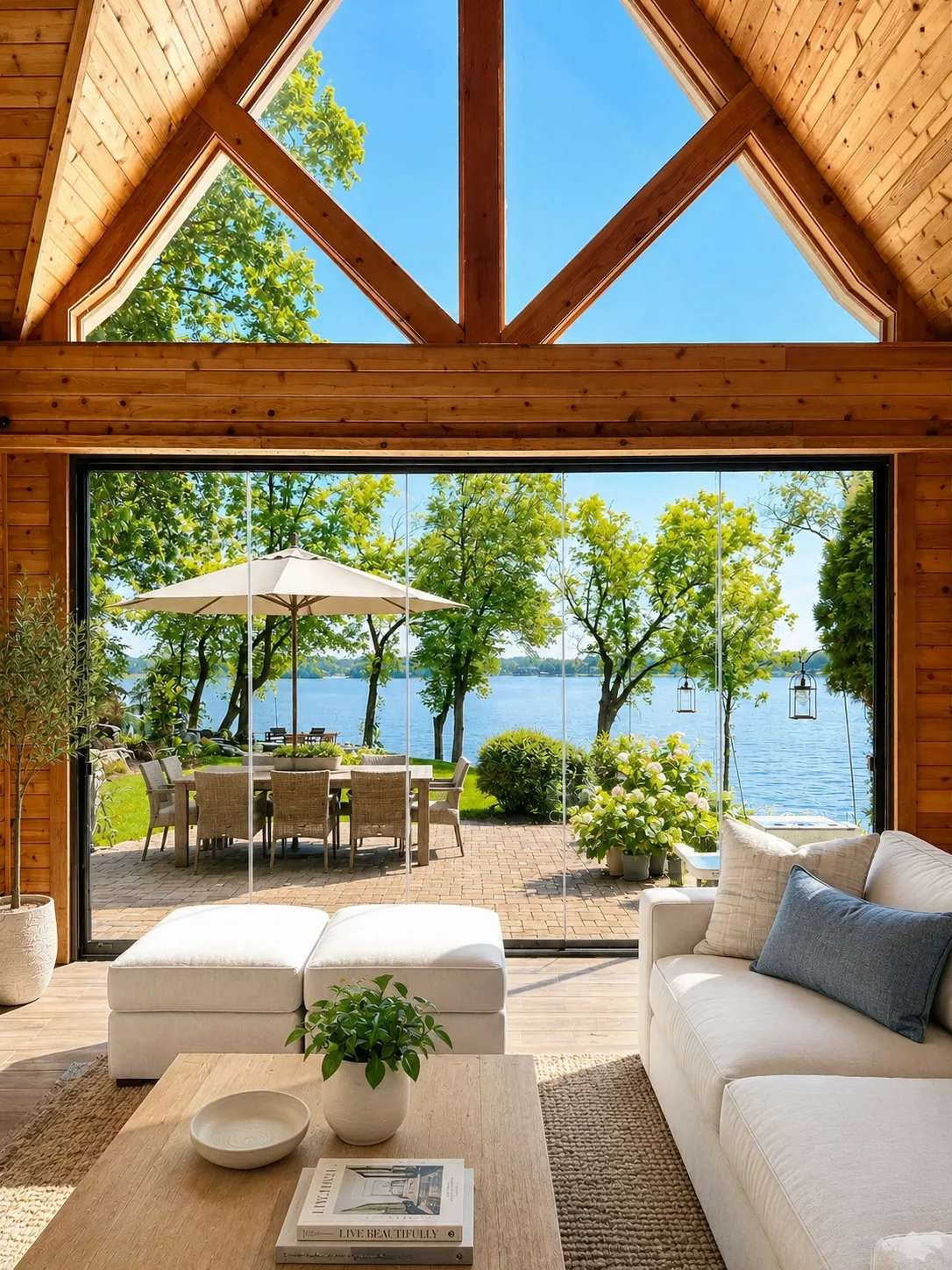
If you already have a screened porch with a sound roof and a straight header, the comparison stops being close. You paid for the expensive parts years ago. Converting keeps the roof, the floor, the posts, the ceiling fan, and the view, and swaps out the one component that was always going to wear out. Our crews do most of those conversions in two to three days, with no drywall phase and no dumpster in the driveway.
If you are starting from an open deck or a bare slab, the numbers are closer and the honest answer depends on how you plan to use the room. That is worth a conversation about what kind of room you are actually shopping for before anybody quotes anything.
Where to start
Go stand on the porch and look at the screens. If any of them are sagging, patched, or five years overdue, you are already scheduled to spend money on that room. The only question is whether you spend it on mesh again or on something you never have to replace. Read how we enclose an existing porch, see what we do around the Waconia and Lake Minnetonka lots, or have us come measure yours.
Want to see what any of this looks like on your own house? Book a free in-home consultation. We measure, talk through options, and leave you with a real number.